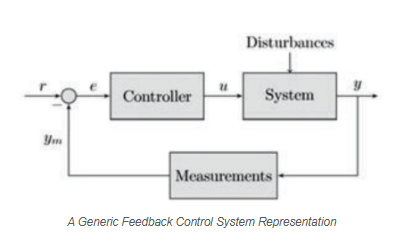
This article explores the human urge for control and how it manifests in engineering control systems. It explains the fundamental building blocks of control systems—plants, sensors, controllers, and feedback loops—while highlighting the importance of accurate modelling, handling disturbances, and system non-linearity. The author emphasises that as systems grow more complex, effective control design increasingly relies on mathematical modelling and simulation. Ultimately, the article argues that future progress in control engineering depends on rethinking established boundaries to develop simpler, more robust, and innovative control laws for increasingly diverse applications.
Original Publication
This article is adapted from a published feature in JURUTERA, The Institution of Engineers Malaysia (December 2021). Please click on the link below to learn more.