Introduction
As environmental challenges like pollution, climate change and biodiversity loss intensify in this ecologically rich yet vulnerable region, innovative solutions are crucial for effective monitoring and conservation monitoring and conservation. This article delves into the latest robotic systems for marine and freshwater environments, highlighting their capabilities in real-time data collection, habitat mapping and pollutant detection
Key topics include autonomous underwater vehicles (AUVs), remotely operated vehicles (ROVs) and autonomous surface vessels (ASVs) for comprehensive assessments, alongside the integration of artificial intelligence (AI) to enhance data accuracy and decision-making.
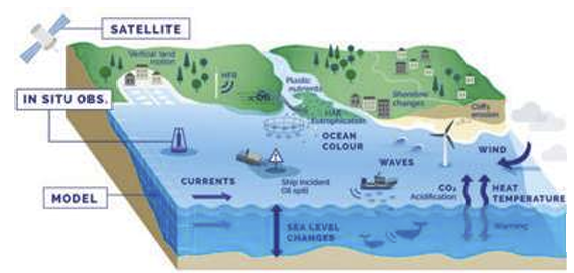
Figure 1: Example of typical coastal marine hazards and their monitoring systems
The marine and freshwater ecosystems of Malaysia and its neighboring countries are among the most biodiverse on the planet. These ecosystems provide critical services, from supporting fisheries to maintaining water quality and offering tourism opportunities. However, they are increasingly threatened by pollution, climate change, overfishing and habitat destruction. This article explores how robotics can enhance environmental monitoring and conservation efforts in Malaysia and its surrounding regions. Figure 1 shows the schematic representation (non-exhaustive) of typical coastal zone, hazards (in normal font) and meet-ocean variables (in bold font) which are relevant for coastal marine hazards and their monitoring [HFR: high-frequency radar; HAB: harmful algae bloom]
Need for Advanced Environmental Monitoring
Environmental challenges in South-East Asia’s aquatic ecosystems are multifaceted and escalating. Effective monitoring is essential for managing these challenges (see Figure 2).
- Pollution: Industrial discharge, agricultural runoff and plastic waste are major pollutants affecting water quality in rivers, lakes and coastal areas. Monitoring these pollutants is critical for protecting public health and biodiversity.
- Climate Change: Rising sea-level, ocean acidification and changing weather patterns are profoundly affecting marine and freshwater ecosystems. Continuous monitoring helps in understanding these impacts and developing mitigation strategies.
- Biodiversity Loss: Overfishing, deforestation and habitat destruction are leading to significant declines in species diversity. Monitoring biodiversity is essential for conservation efforts and sustainable management of natural resources.
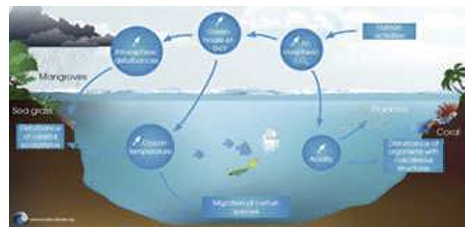
(Figure 2: Impact of pollution, climate change and biodiversity loss on aquatic ecosystems)
Alignment with UN Sustainable Development Goals
The United Nations Sustainable Development Goals (SDGs) provide a framework for addressing global environmental challenges. Robotic technologies in environmental monitoring directly support several SDGs:
- Goal 6 – Clean Water and Sanitation
By monitoring water quality and detecting pollutants and robotic systems can help the availability and sustainable management of water and sanitation for all. - Goal 13 – Climate Action
Robotics play a critical role in monitoring climate impacts on aquatic ecosystems, aiding in the development of effective adaptation and mitigation strategies and supporting mitigation strategies. - Goal 14 – Life Below Water
By assessing the health of marine ecosystems, detecting pollution and monitoring biodiversity, robotic technologies support the conservation and sustainable use of oceans, seas and marine resources. - Goal 15 – Life on Land
Monitoring inland water ecosystems such as rivers and lakes helps protect terrestrial ecosystems and manage forests sustainably.
Robotic Technologies in Environmental Monitoring
Robotic technologies offer significant advantages for environmental monitoring, providing precise,
comprehensive and real-time data. Key robotic systems include AUVs, ROVs and ASVs
(see Figure 2).
- Autonomous Underwater Vehicles (AUVs): AUVs are ideal for exploring coral reefs such as those in the Coral Triangle and other underwater habitats. Equipped with sensors for water quality, temperature and salinity and other parameters, AUVs can perform systematic surveys and map underwater environments in detail..
- Remotely Operated Vehicles (ROVs):ROVs are used extensively for underwater inspections and interventions. In the context of South-East Asia, ROVs can be deployed for tasks such as inspecting the health of coral reef, assessing damage from trawling or illegal fishing and investigating underwater archaeological sites.
- Autonomous Surface Vessels (ASVs): ASVs are valuable for monitoring coastal waters, estuaries and large inland water bodies such as Lake Kenyir. They can collect water quality data, map underwater topography and track marine life movement.
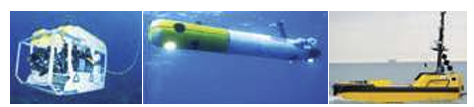
(Figure 3: Examples of ROV, AUV and ASV)
Capabilities and Applications
Robotic systems enhance environmental monitoring through several key capabilities:
- Real-Time Data Collection: Robots provide continuous, real-time data crucial for detecting and responding to environmental changes such as pollution spills or algal blooms
- Habitat Mapping: Robotic systems create detailed maps of habitats such as coral reefs, mangroves and seagrass beds which are abundant in Malaysia and the broader South-East Asian region. These maps are essential for assessing habitat health and planning
- Pollutant Detection: Robots equipped with chemical sensors can detect pollutants such as heavy metals, nitrates and microplastics as well as help identify sources of pollution and assess the impact on ecosystems.
Integration of Artificial Intelligence (AI)
AI significantly enhances the capabilities of robotics systems in environmental monitoring. AI applications include
- Data Processing and Analysis:
AI algorithms can analyse large datasets collected by robots, identifying patterns and anomalies. This is especially useful for monitoring long-term environmental changes and assessing ecosystem health. - Predictive Modelling:
AI can develop models to predict environmental changes and their impacts, aiding in proactive management and conservation strategies. - Autonomous Decision-Making:
AI enables robots to operate autonomously, making real-time decisions based on data. This is critical for tasks such as detecting and containing pollution or navigating complex underwater environments.
Interdisciplinary Collaboration
The successful application of robotics in environmental monitoring relies on collaboration among various disciplines. In Malaysia and surrounding region, robotics engineers, marine biologists and environmental scientists can work together to design, deploy and interpret data from robotics systems. This interdisciplinary approach ensures robots are equipped with the necessary sensors and capabilities to address specific environmental challenges.
Future Directions
The field of robotic environmental monitoring in Malaysia and South-East Asia is rapidly evolving, with several promising developments:
- Advanced Sensors – New sensor technologies will enhance the capabilities of robotic systems, enabling more precise and comprehensive data collection. These sensors may include advanced chemical detectors, DNA sequencers and high-resolution imaging systems.
- Improved Autonomy – Advance in AI and machine learning will enable robots to operate with greater autonomy, reducing the need for human intervention and increasing the efficiency of monitoring efforts.
- Enhanced Connectivity – Improved communication technologies will enable real-time data sharing between robots and researchers, facilitating more coordinated and effective monitoring efforts.
- Integration with Other Technologies – Robotics systems will increasingly be integrated with other technologies, such as satellite remote sensing and Internet of Things (IoT) devices, providing a more holistic view of environmental conditions.
Conclusion
Robotic technologies have immense potential to revolutionise environmental monitoring and conservation efforts in Malaysia and its surrounding regions. By providing high-resolution, real-time data, these systems enable more effective management of marine and inland water eco systems. The integration of AI further enhances the capabilities of robots, allowing for more accurate data analysis and decision making. Successful case studies demonstrate the practical applications of these technologies, highlighting their impact on environmental monitoring
Moving forward, interdisciplinary collaboration and continued technological advancements will be essential leveraging the full potential of robotics in sustaining aquatic ecosystems. Through these efforts, we can deepen our understanding of the vital environments and develop proactive strategies t protect them for future generations, in alignment with the UN Sustainable Development Goals.
Prepared by

Ir. Ts. Prof. Dr Mohd Rizal Arshad, FASc
Specialises in Robotics and Industrial Automation, Measurement and Instrumentation Techniques, Biomedical Electronics and Intelligent Systems.
Primary expertise: underwater system technology, marine robotics and sensing methods.
Original Publication
This article is adapted from a published feature in JURUTERA, The Institution of Engineers Malaysia (August 2024).
[Download PDF] (upload the PDF to Media Library and link here)